CPW.ORG
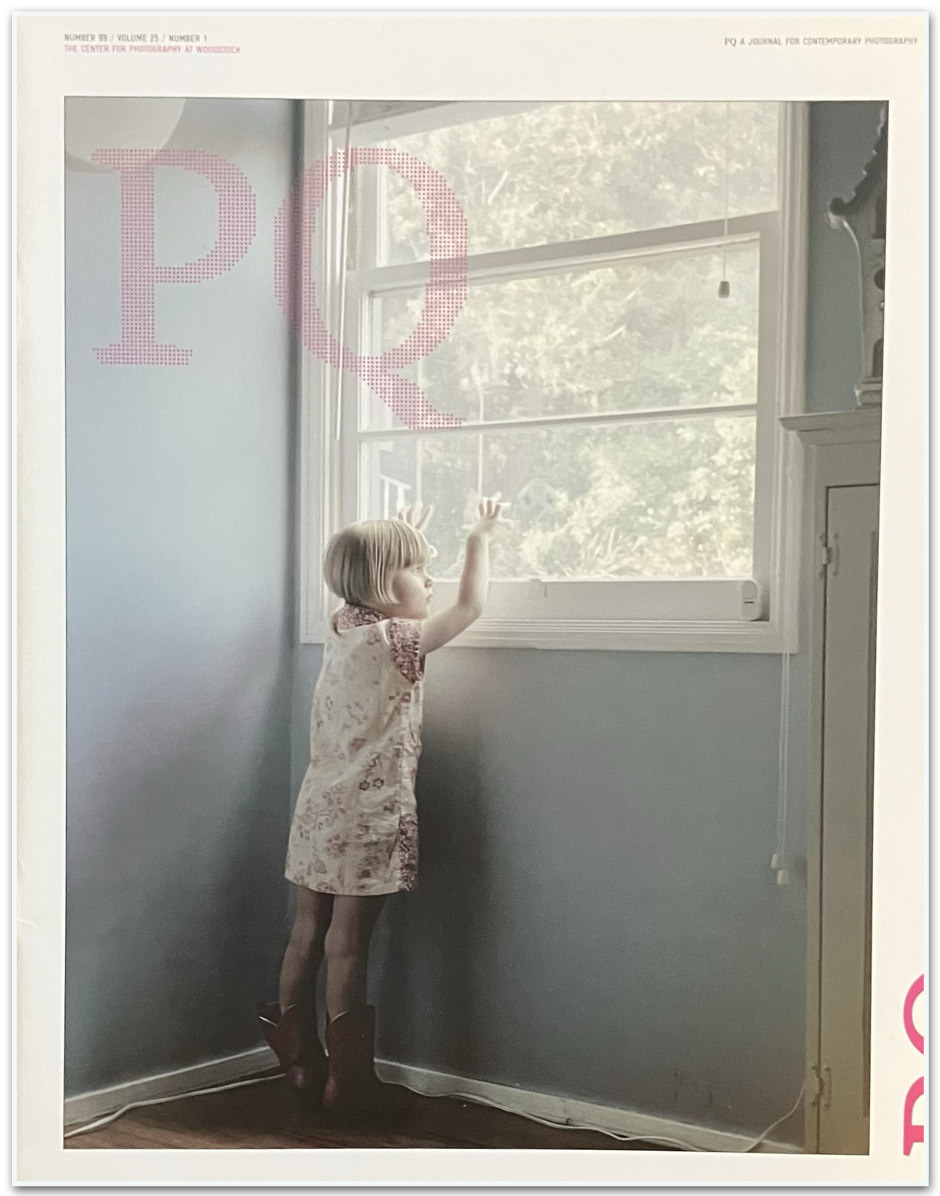
©CPW ©Andrea Land
CLIENT: Center For Photography at Woodstock (CPW)
JOB: Guest Editor, Photography Quarterly (No. 99)
WHEN: 2010
I was commissioned by the Center for Photography at Woodstock (CPW), a non-profit organization in upstate New York, to be the Guest Editor of its magazine, Photography Quarterly (PQ).
In my role as editor, I wrote an opening essay entitled, Photography’s Ontology, and commissioned the following texts: Interview with Curtis Mann, by Larissa Leclair; Helen Sear: Inside The View, by Addie Vassie.
The publication featured work by the following photographers: Curtis Mann, Dong Yoon Kim, Helen Sear, Beth Dow, Marc Baruth, Alejandro Chaskielberg, Matthew Baum, and Chris McCaw.
The publication also included a feature on the photographers selected for CPW’s annual Photography Now open call—for which I was the juror. This featured photographs by Jeffris Elliott, Martine Fougeron, Jessica M. Kaufman, Andrea Land, Adam Magyar, and Stephen Strom.
Photography’s Ontology (extract)
Photography was not a 19th Century discovery. It was a construction that arose from a pictorial strategy, originating in the Renaissance system of perspective. Despite this, there existed a romantic notion that photography was somehow a predetermined and natural locus of the world; ‘self-representations’ that provided us with some level of objective truth. The fact of its indexicality—the subject had to have existed to have been photographed—has been an enabler of this perception; at least to the extent that photography continues to straddle a position whereby it is neither unequivocally true nor properly figured.
Not too long after its inception, the carte-de-visite launched photographic portraiture, and by extension photography more generally, into the realms of mass production and consequently mass consumption. At that time, photography was thrust into an environment of dynamic social change, which was driven by the rise of industrialization. Today, photography and society is similarly propelled by the digital revolution.
Indeed, the evolution of photography and its ongoing development is intrinsically connected to technical innovation, culture and politics. The materiality of the photograph as object, its dissemination via various forms of communication and presentation, and the continuing slippage of meaning and value is what makes it one of the most influential and contentious of the visual arts. Photography has risen to become the most ubiquitous form of visual imagery, so much so that the photograph itself is virtually rendered invisible; that is, it’s a transparent representation in the sense that it is the form of representation that is accepted by society as the norm.
Within this context, the subject of photography’s ontology is of particular interest—not only within the fine art market but where the photograph continues to uphold a utilitarian function. There are two ways in which to consider the nature of the photograph; the photograph as phenomena (the object itself and its construction) and the photograph’s social/subjective intersection (how it is perceived, encountered and used). Of course, neither can be totally divorced from the other.
READ THE FULL TEXT HERE (pdf)